Apartment living has many advantages. It’s often more affordable, easier to maintain, and located closer to work, entertainment, and city conveniences. However, one challenge many apartment dwellers face is making a smaller living room feel spacious, functional, and inviting.
When square footage is limited, every design choice matters. The furniture you choose, the colors you use, the way you arrange your décor, and even your lighting can dramatically impact how large or small a room feels. Fortunately, you don’t need to knock down walls or spend thousands of dollars on renovations to create a more open and comfortable living space.
Interior designers have long relied on visual tricks and smart decorating techniques to maximize small rooms. By understanding how scale, light, color, and layout influence perception, you can make even the smallest apartment living room feel significantly larger.
Whether you’re decorating your first apartment, downsizing to a smaller space, or simply looking to refresh your current living room, these practical design strategies can help you create a room that feels brighter, larger, and more enjoyable to spend time in.
Why Small Living Rooms Often Feel Cramped
Before diving into solutions, it’s helpful to understand why some rooms feel smaller than they actually are.
Common causes include:
- Oversized furniture
- Poor lighting
- Dark color palettes
- Visual clutter
- Blocked natural light
- Too many decorative accessories
- Inefficient furniture layouts
Fortunately, many of these problems can be solved with thoughtful design choices rather than major renovations.
1. Embrace the Power of Mirrors
If there’s one decorating trick that consistently works in small spaces, it’s using mirrors.
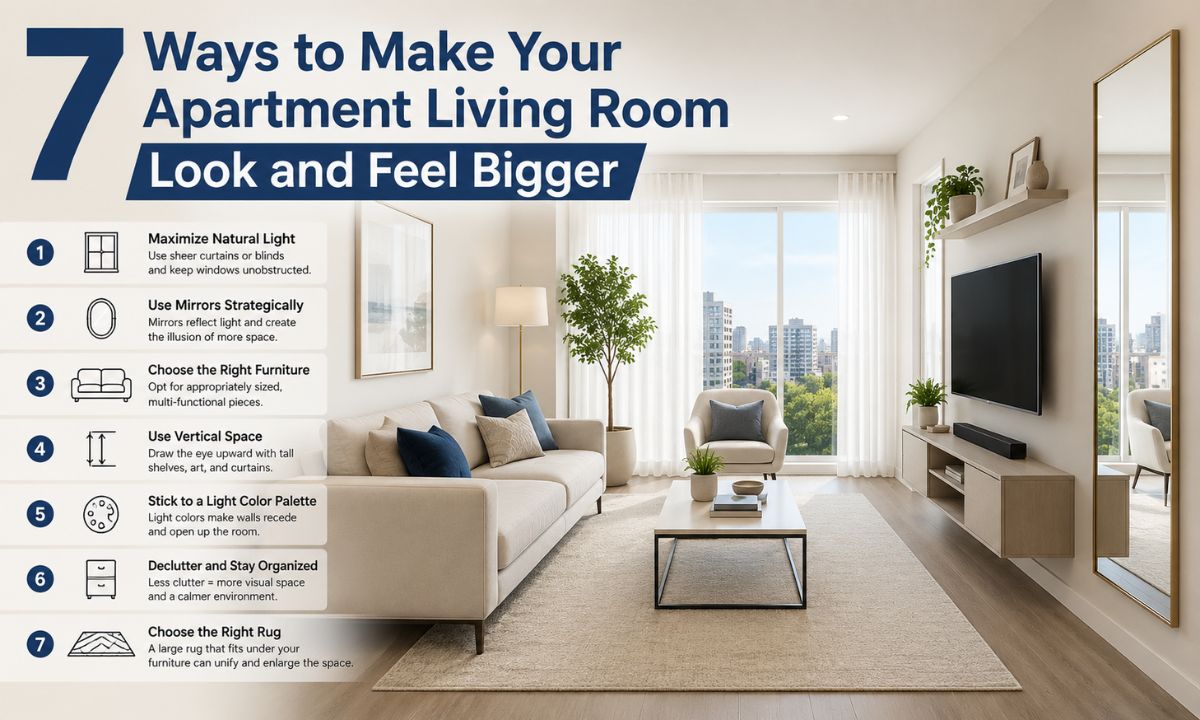
Mirrors create the illusion of depth by reflecting both light and surrounding views. This instantly makes a room feel more open and spacious. Designers often use mirrors to visually double the size of a room without changing its physical dimensions.
One of the best placements for a large mirror is directly across from a window. This allows natural light to bounce throughout the room while reflecting outdoor scenery, creating the impression of an additional window.
Other ways to use mirrors include:
- Leaning oversized mirrors against walls
- Creating a gallery wall with smaller mirrors
- Installing mirrored furniture accents
- Using mirrored trays and decorative accessories
The larger the mirror, the greater the impact.
2. Choose Furniture with Visible Legs
Furniture that sits directly on the floor often feels visually heavy.
Bulky sofas, oversized armchairs, and large coffee tables can make a small room feel crowded and closed in. One simple solution is choosing furniture with exposed legs.
When you can see the floor beneath furniture, the room feels more open because your eye can travel farther across the space.
Great options include:
- Mid-century modern sofas
- Raised armchairs
- Slim coffee tables
- Open-frame side tables
- Floating media consoles
These pieces create a lighter appearance while still providing the same functionality.
Why It Works
Visible floor space creates visual breathing room and improves the overall sense of flow throughout the room.
3. Take Advantage of Vertical Space
When floor space is limited, the only direction left to go is upward.
Using vertical storage draws the eye toward the ceiling and creates the illusion of height. This simple design principle can make even low-ceiling apartments feel larger.
Consider adding:
- Floor-to-ceiling bookcases
- Tall storage cabinets
- Floating shelves
- Vertical artwork arrangements
- Wall-mounted lighting
Instead of spreading storage horizontally across the room, vertical solutions maximize space without increasing clutter.
Create Height with Curtains
One designer-approved trick is hanging curtain rods closer to the ceiling rather than directly above the window frame.
This creates the illusion of taller windows and higher ceilings.
4. Layer Your Lighting
Lighting plays a huge role in how spacious a room feels.
Dark corners and uneven lighting can make a room appear smaller and more confined. A well-lit room, on the other hand, feels open, inviting, and larger than it actually is.
Rather than relying on a single overhead fixture, create multiple layers of lighting.
Essential Lighting Layers
Ambient Lighting
Provides overall room illumination.
Task Lighting
Supports activities such as reading or working.
Accent Lighting
Highlights artwork, shelves, or decorative features.
Good lighting sources include:
- Floor lamps
- Table lamps
- Wall sconces
- LED strip lighting
- Under-shelf lighting
The combination creates depth and dimension throughout the room.
Maximize Natural Light
Natural light remains one of the most powerful tools for making a room feel bigger.
Use light-filtering curtains or sheer panels whenever possible to allow sunlight to fill the space.
5. Use a Light and Cohesive Color Palette
Color has a significant impact on how large a room feels.
Light colors reflect more light, helping walls visually recede and making rooms appear larger.
Popular small-space colors include:
- White
- Cream
- Light gray
- Soft beige
- Pale blue
- Sage green
- Warm ivory
This doesn’t mean your room has to feel boring or sterile.
You can still incorporate color through:
- Throw pillows
- Artwork
- Rugs
- Decorative accessories
- Plants
The key is maintaining consistency throughout the room.
Avoid Visual Fragmentation
Using too many contrasting colors can make a room feel busy and divided.
A cohesive palette allows the eye to move smoothly around the space, creating a more expansive appearance.
6. Invest in Multi-Functional Furniture
In smaller apartments, every piece of furniture should work harder.
Multi-functional furniture helps maximize square footage while reducing clutter.
Excellent examples include:
Storage Ottomans
These provide:
- Hidden storage
- Extra seating
- Coffee table functionality
Nesting Tables
Use only when needed and tuck them away afterward.
Sleeper Sofas
Perfect for apartments that occasionally host overnight guests.
Lift-Top Coffee Tables
Great for dining, working, and storing essentials.
Storage Benches
Ideal for entryways and living rooms alike.
Choosing versatile furniture helps keep your space organized and efficient.
7. Define the Room with the Right Rug
Many apartment dwellers accidentally make their living rooms feel smaller by choosing rugs that are too small.
A tiny rug floating in the center of the room visually shrinks the seating area.
Instead, choose a rug large enough for at least the front legs of your major furniture pieces to rest on it.
Benefits of Proper Rug Placement
A larger rug:
- Anchors the room
- Creates visual unity
- Defines conversation areas
- Makes the space feel more intentional
Light-colored rugs and subtle patterns can also contribute to a more spacious atmosphere.
Bonus Tips for Making a Small Living Room Feel Bigger
Reduce Visual Clutter
Clutter immediately makes any room feel smaller.
Regularly edit decorative accessories and avoid overcrowding surfaces.
Use Transparent Furniture
Glass and acrylic furniture pieces take up less visual space.
Because they allow light to pass through, they feel much lighter than solid furniture.
Add Large-Scale Artwork
Surprisingly, one large piece of artwork often works better than multiple small pieces.
Large art creates a focal point without adding visual clutter.
Keep Furniture Away from Walls
Pulling furniture slightly away from walls can create a sense of depth and improve room flow.
Incorporate Plants
Plants add life, texture, and freshness without overwhelming a space.
Tall plants also help emphasize vertical height.
Common Small Living Room Mistakes
Avoid these common decorating errors:
- Using furniture that’s too large
- Blocking windows
- Choosing tiny rugs
- Overdecorating shelves
- Using only overhead lighting
- Ignoring vertical storage
- Overcrowding corners
Small adjustments can often make a dramatic difference.
FAQs
What color makes a small living room look bigger?
White, cream, light gray, soft beige, and pale blue are excellent choices because they reflect light and create an airy atmosphere.
Should apartment furniture be small?
Not necessarily. A few appropriately sized larger pieces often look better than many small pieces that create visual clutter.
Do mirrors really make a room feel bigger?
Yes. Mirrors reflect light and views, creating the illusion of depth and making rooms feel significantly larger.
What’s the best rug size for a small living room?
Choose a rug large enough so that at least the front legs of your sofa and chairs sit on it.
How can I make my apartment feel more luxurious?
Focus on layered lighting, cohesive colors, quality textiles, oversized artwork, and reducing clutter.
Conclusion
Making an apartment living room feel bigger isn’t about adding more space—it’s about using the space you already have more effectively. Through thoughtful furniture choices, strategic lighting, smart storage solutions, and intentional decorating, you can completely transform how your living room feels.
By incorporating mirrors, embracing vertical design, choosing multifunctional furniture, and maintaining a cohesive color palette, you’ll create a room that feels open, comfortable, and inviting. The best part is that most of these changes are affordable, renter-friendly, and easy to implement.
A small living room doesn’t have to feel limiting. With the right design strategies, it can become one of the most beautiful and functional spaces in your home.

Rana Haseeb is a visionary CEO and a seasoned Content Writer with over 7 years of extensive experience in the digital industry. He specializes in blending executive leadership with high-impact storytelling to build brands that resonate. With a deep understanding of market trends and strategic communication, Rana has dedicated his career to driving innovation and delivering excellence in every project he leads.