Small rooms often make book lovers feel like they have to choose between style and storage. The good news is that you never have to sacrifice your favorite books just because you live in a compact apartment, studio, or cozy home. With a little creativity, even the smallest corners can become beautiful reading spaces filled with personality and charm.
The secret is learning how to use every inch wisely. Empty walls, overlooked corners, narrow hallways, and unused spaces around windows can all become practical storage areas. These smart bookshelf ideas will help you organize your collection, improve your room’s appearance, and create a home that feels larger, brighter, and more inviting.
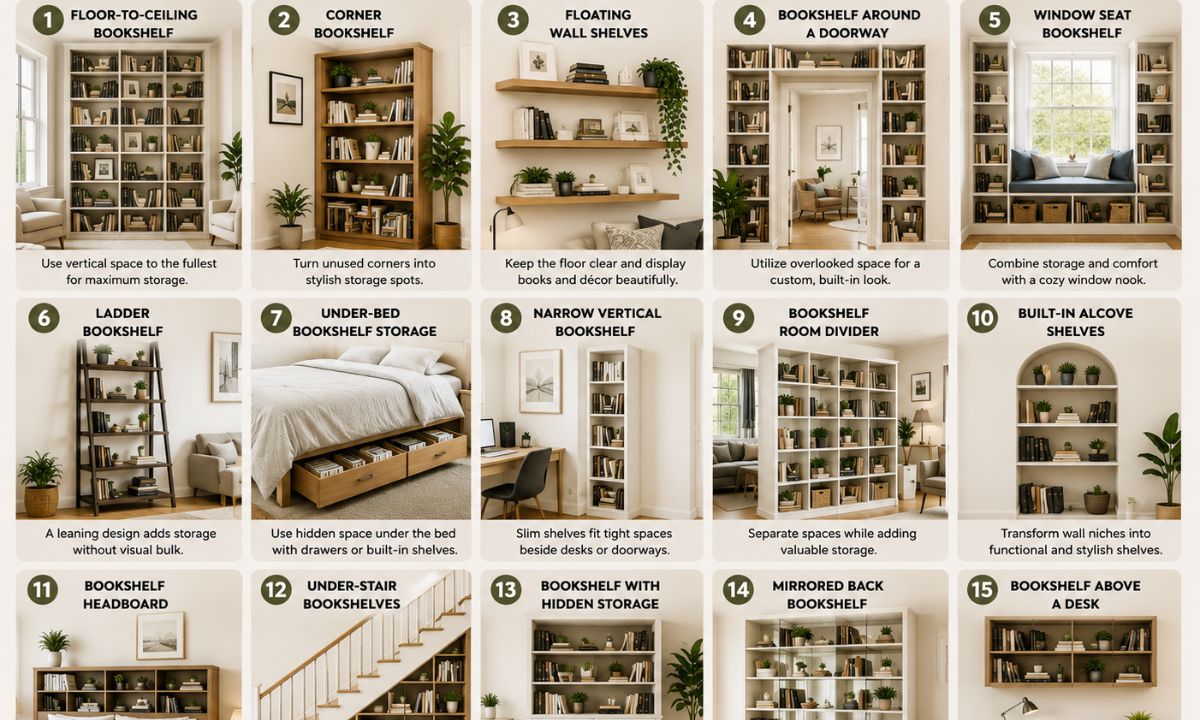
Here are 15 smart bookshelf ideas for small spaces that combine function, style, and space-saving design.
1. The “Invisible” Floating Stack
Floating shelves are one of the easiest ways to add storage without making a room feel crowded. Hidden brackets create the illusion that books are floating directly on the wall, giving your space a clean and modern appearance.
These shelves work particularly well in narrow areas where traditional bookcases would feel bulky. Place them beside windows, above desks, or behind doors to display favorite novels while keeping valuable floor space completely free.
2. The Over-The-Door Savior
The space above a doorway is often forgotten, yet it can hold an impressive number of books. Installing a long shelf above a bedroom, office, or living room door instantly creates extra storage without affecting your room layout.
This idea also draws the eye upward, making ceilings appear higher and rooms feel more spacious. It is a simple upgrade that adds both character and functionality.
3. The Corner Climber
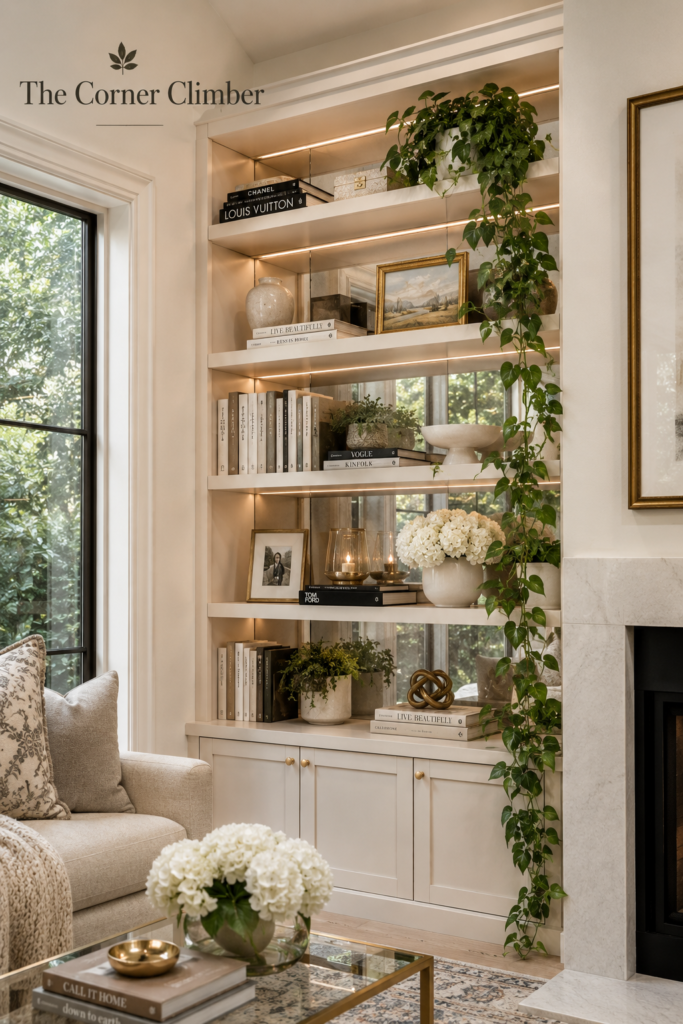
Corners are among the most underused areas in any home. A corner bookshelf or floating corner shelves can transform an empty nook into a stylish reading display.
By stacking books vertically in a corner, you maximize storage while maintaining an open feel throughout the room. Corner shelves are especially useful in bedrooms, home offices, and small apartments.
4. The Room Divider Bookcase
If you live in a studio apartment or open-plan home, an open-back bookshelf can serve two purposes at once. It stores books while creating a visual separation between different areas of the room.
Unlike solid dividers, open shelving allows light to pass through, helping the space remain bright and airy. This makes it a practical solution for defining zones without making a room feel smaller.
5. The Hallway Library
A hallway can become much more than a pathway between rooms. Slim bookcases or shallow wall-mounted shelves can turn unused hallway walls into a personal library.
Even a narrow corridor can hold hundreds of books when storage is designed thoughtfully. The result feels elegant, organized, and surprisingly cozy.
6. The Window Frame Wrap-Around
Framing a window with bookshelves creates a custom built-in appearance that instantly elevates a room. Tall shelves on each side combined with a shelf across the top provide significant storage while drawing attention to natural light.
Adding a bench beneath the window creates a comfortable reading nook where you can relax with your favorite book.
7. The Rolling Library Cart
A rolling cart offers flexibility that traditional bookshelves cannot match. You can move it beside your sofa while reading, position it next to your bed at night, or tuck it away when guests arrive.
This portable storage solution is perfect for renters and small-space dwellers who appreciate versatility and convenience.
8. The Ladder Lean
Ladder shelves bring vertical storage into a room without feeling heavy or overwhelming. Their tapered design keeps the overall look light and modern.
These shelves are ideal for displaying books, decorative objects, plants, and framed photos. Because they lean against the wall, they are also renter-friendly and easy to reposition.
9. Under-The-Bench Storage
The area beneath a bench often goes completely unused. By adding baskets, cubbies, or neatly stacked books, you can turn that hidden space into valuable storage.
This idea works especially well in entryways, dining areas, and window seats where every inch matters.
10. The Headboard Substitution
A bookshelf placed behind the bed can replace a traditional headboard while adding substantial storage. It provides space for books, lamps, decorative accents, and nighttime essentials.
This setup creates a cozy atmosphere and eliminates the need for additional bedside furniture, helping the room feel more organized.
11. Closet Wing Shelves
Closets often contain narrow side walls that are difficult to use effectively. Installing slim shelves in these areas creates a discreet place to store books without taking up living space.
It is an excellent solution for seasonal reads, collections, or books you want nearby but not on display.
12. The Alcove Hack
Architectural features such as alcoves, wall recesses, and unused fireplaces can become beautiful built-in bookshelves. Custom floating shelves allow books to fit perfectly within the available space.
This approach highlights a room’s unique character while making practical use of otherwise awkward areas.
13. Crate Stacking
Wooden crates offer a budget-friendly and customizable bookshelf solution. They can be stacked vertically, arranged horizontally, or combined into unique shapes that suit your space.
Their modular design makes them especially useful for renters or anyone who moves frequently, since the layout can easily change when needed.
14. Picture Ledge Displays
Picture ledges allow books to be displayed face-forward, showcasing beautiful covers like artwork. This is particularly effective for children’s books, coffee table books, and decorative collections.
The display adds color and personality to blank walls while keeping books organized and accessible.
15. The “Rafter” Shelf
A high shelf installed near the ceiling can wrap around an entire room, creating an impressive library effect without using any floor space.
This solution is ideal for avid readers with growing collections. It draws attention upward, adds architectural interest, and provides storage that would otherwise be impossible to achieve in a small room.
FAQ
What type of bookshelf is best for a small room?
Floating shelves, ladder shelves, and corner bookshelves are excellent choices because they maximize vertical space while keeping the floor clear.
How can I store books without making my room look crowded?
Use wall-mounted shelves, over-the-door storage, and slim bookcases. Choosing light-colored shelving can also help the room feel more open and spacious.
Are floating shelves strong enough for books?
Yes, when installed properly into wall studs or with suitable anchors, floating shelves can safely support a large number of books.
How do I make a small room feel bigger with bookshelves?
Install shelves higher on the wall, use vertical storage solutions, and avoid bulky furniture. Drawing the eye upward creates the illusion of a larger space.
Can renters use these bookshelf ideas?
Absolutely. Ladder shelves, rolling carts, crate shelving, and certain freestanding bookcases are renter-friendly options that require little or no wall modification.
Conclusion
A small home should never stop you from building the book collection of your dreams. With thoughtful planning and creative storage solutions, even the tiniest apartment can accommodate a stylish and functional library. Whether you choose floating shelves, corner units, rolling carts, or ceiling-height displays, each idea helps transform unused space into something beautiful and practical. The key is to look beyond traditional bookcases and discover opportunities hidden in every wall, corner, and doorway. With the right bookshelf strategy, there is always room for one more favorite book.

Rana Haseeb is a visionary CEO and a seasoned Content Writer with over 7 years of extensive experience in the digital industry. He specializes in blending executive leadership with high-impact storytelling to build brands that resonate. With a deep understanding of market trends and strategic communication, Rana has dedicated his career to driving innovation and delivering excellence in every project he leads.