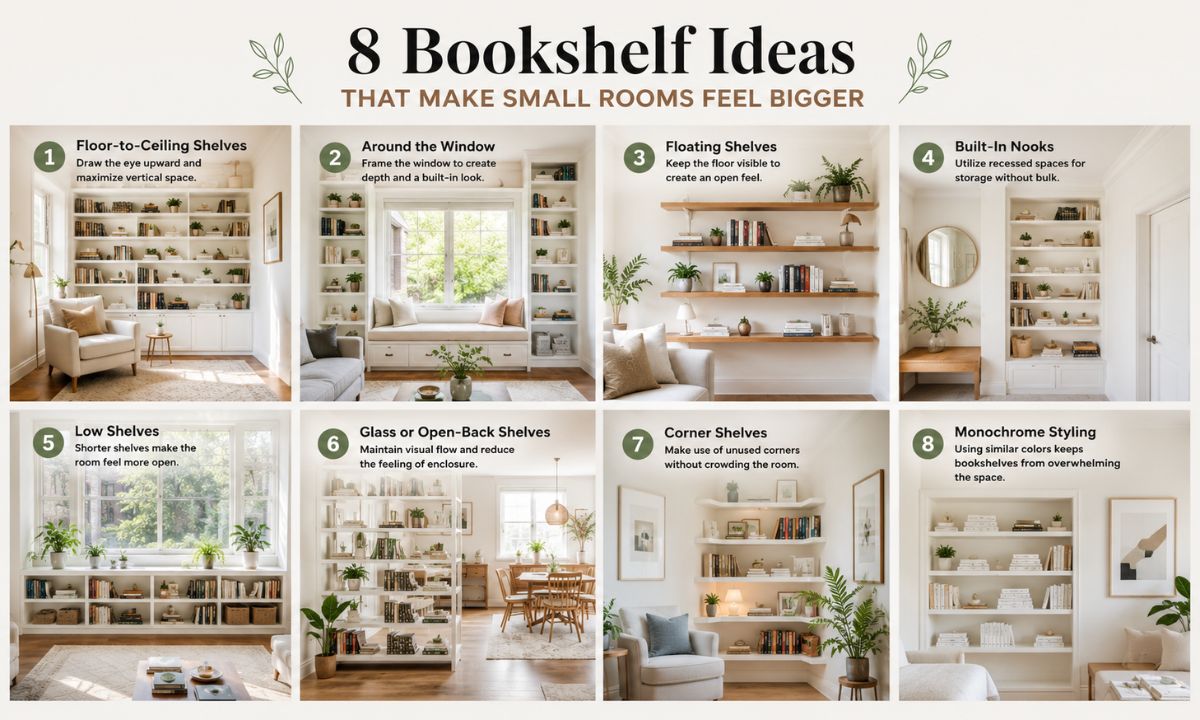
Living in a small room often means making difficult choices about furniture and storage. Many people assume that adding a bookshelf will only make a room feel tighter and more crowded. However, the right bookshelf can actually create the opposite effect. With smart placement, thoughtful design, and the right colors, a bookshelf can make a compact room appear larger, brighter, and more organized.
Bookshelves are no longer just storage units for books. They have become stylish design features that can visually expand a room while adding personality and charm. Whether you’re decorating a tiny bedroom, a small apartment, or a cozy reading corner, these bookshelf ideas will help you maximize space without sacrificing style.
1. Go Vertical with Tall, Narrow Bookshelves
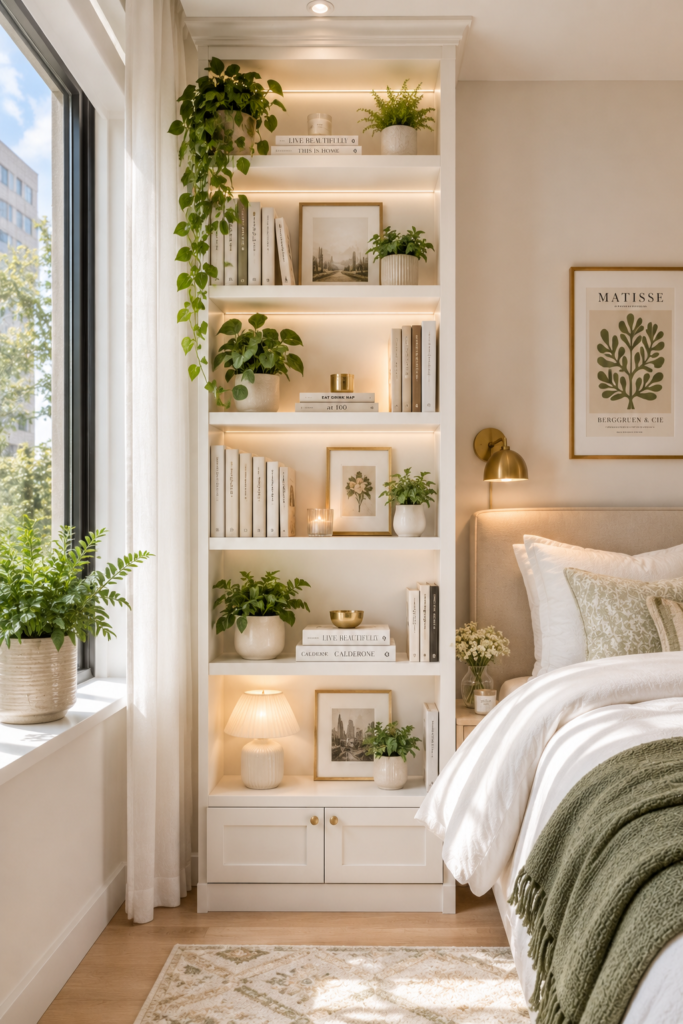
When floor space is limited, it makes sense to use vertical space. Tall and narrow bookshelves naturally draw the eyes upward, making ceilings appear higher and rooms feel more spacious.
Instead of placing one bulky bookcase along a wall, consider using slim bookshelves in corners or on either side of a window. This creates balance while keeping the room open and uncluttered.
The vertical design also provides plenty of storage without consuming valuable floor area. Add a few decorative items, plants, or framed photos between books to create a stylish display that enhances the room’s overall appeal.
2. Embrace Floating Shelves
Floating shelves are one of the best solutions for small rooms because they provide storage without occupying floor space. Their clean and minimalist appearance instantly makes a room feel less crowded.
Install floating shelves above a desk, bed, dresser, or reading nook to create practical storage while maintaining an open layout. Matching the shelf color to the wall color helps them blend seamlessly into the room.
Floating shelves also give you the freedom to create unique arrangements. You can install them in staggered patterns, symmetrical layouts, or even corner designs for a customized look.
3. Choose Open-Back Bookshelves
Traditional bookshelves with solid backs can sometimes feel heavy in a small room. Open-back bookshelves, often called etagere shelves, allow light and visibility to pass through them, creating a lighter visual appearance.
Because you can see through the shelving unit, the room maintains a sense of depth. This prevents the bookshelf from acting like a wall that divides the space.
Open-back shelves work particularly well in studio apartments where they can subtly separate living areas while preserving an open and airy environment.
4. Use Light-Colored Bookshelves
Color has a huge impact on how large a room feels. Dark furniture absorbs light and can make spaces feel smaller, while light colors reflect light and create a brighter atmosphere.
White, cream, beige, light gray, and natural wood tones are excellent choices for bookshelves in compact rooms. These colors help walls appear farther apart and make the entire room feel more open.
You can also paint an existing bookshelf in a lighter shade to instantly refresh the space without purchasing new furniture.
5. Add Mirrors Behind Your Bookshelf
Mirrors are one of the oldest interior design tricks for making small spaces appear larger. Adding a mirror behind a bookshelf creates the illusion of additional depth and reflects light throughout the room.
The reflected images make the room seem as though it extends beyond the shelf itself. This simple addition can dramatically transform a cramped corner into a brighter and more spacious area.
Mirror-backed bookshelves also add a touch of sophistication and luxury, making even budget-friendly shelving look more expensive.
6. Choose Low Horizontal Bookcases
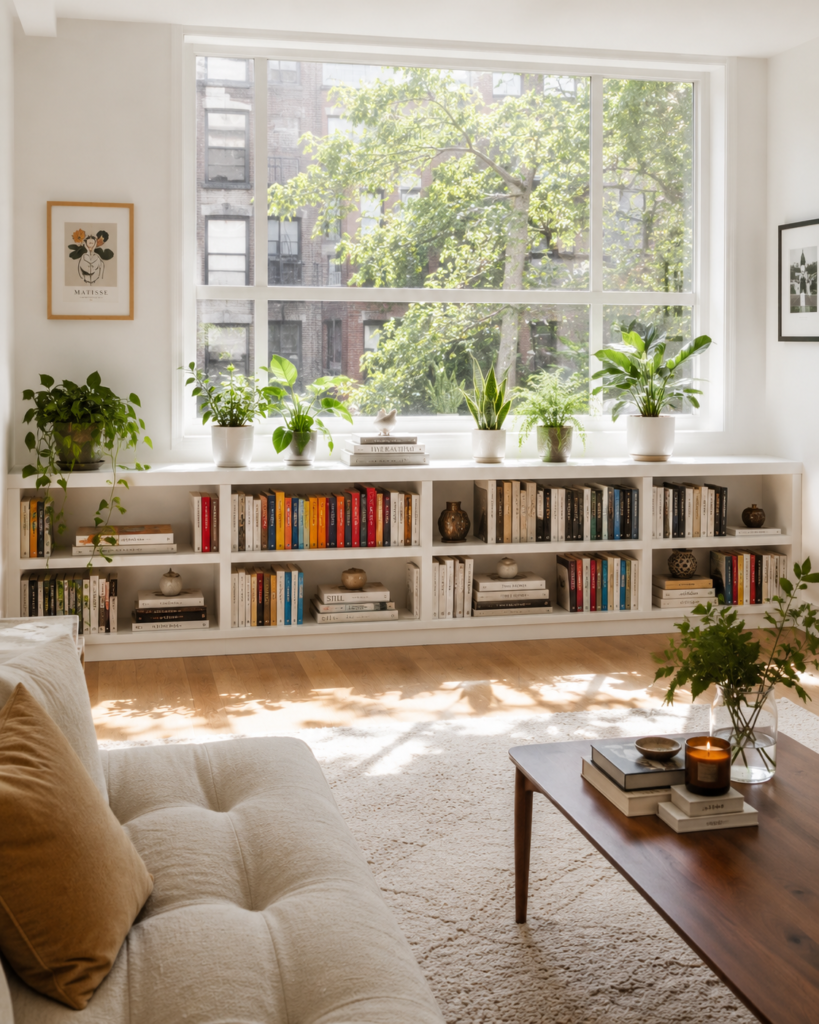
Not every bookshelf needs to be tall. Low horizontal bookcases can make a room feel wider by emphasizing horizontal space instead of vertical height.
These bookcases sit below eye level, allowing walls to remain visible and creating a more open feeling. They can double as media consoles, window seating bases, or decorative display surfaces.
The top of the bookcase can be used for lamps, artwork, candles, or indoor plants, making it both functional and attractive.
7. Match the Bookshelf to Your Wall Color
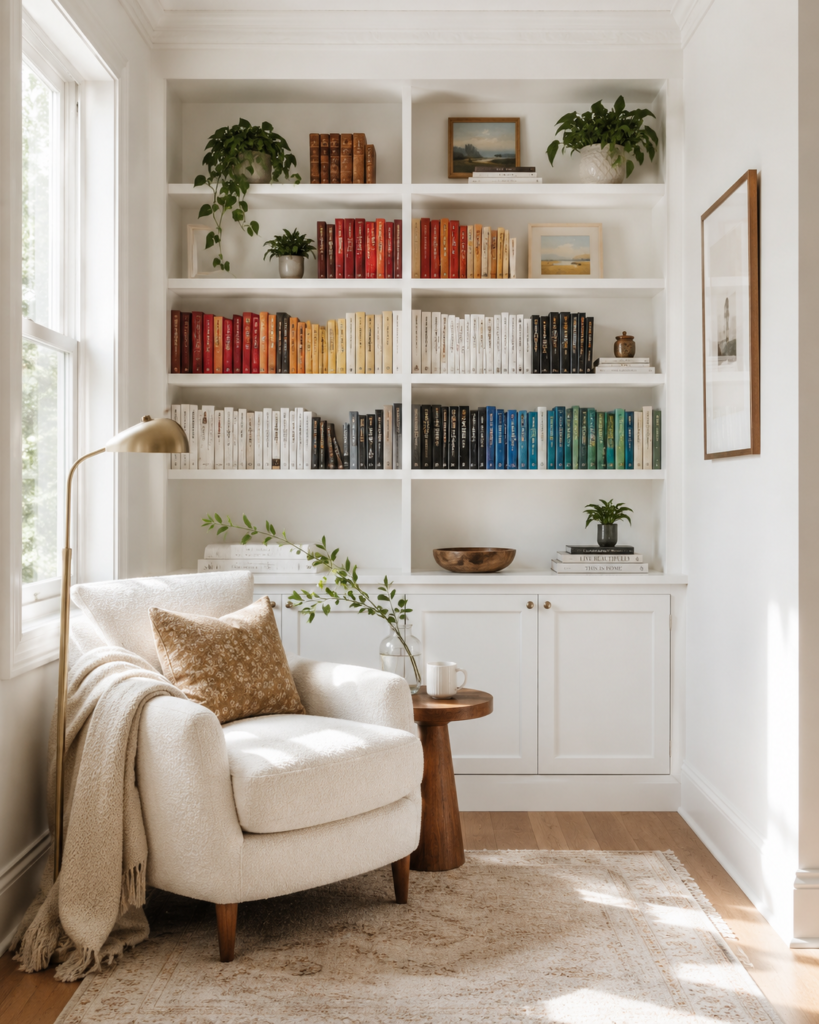
One of the easiest ways to reduce visual clutter is to make your bookshelf blend into the wall. When shelves and walls share the same color, the bookshelf visually disappears into the background.
This creates a built-in appearance that feels clean, seamless, and sophisticated. The focus shifts from the furniture itself to the books and decorative items displayed on it.
The monochromatic look works especially well in small bedrooms, home offices, and reading corners where simplicity enhances the feeling of spaciousness.
FAQ
What type of bookshelf is best for a small room?
Tall, narrow bookshelves and floating shelves are among the best choices because they maximize storage while using minimal floor space.
Do dark bookshelves make a room look smaller?
In many cases, yes. Dark colors absorb light, which can make a room feel more enclosed. Lighter colors generally help create a brighter and larger appearance.
Can bookshelves actually make a room feel bigger?
Yes. Strategic bookshelf designs can create visual height, width, and depth, making a room appear more spacious than it actually is.
Are floating shelves strong enough for books?
Most floating shelves can hold books when installed properly into wall studs or with suitable wall anchors. Always check the weight capacity before installation.
How do I decorate a bookshelf without making it look cluttered?
Mix books with decorative objects, plants, and framed photos. Leave some empty space between items to create balance and maintain an organized look.
Conclusion
A small room doesn’t mean you have to sacrifice storage or style. The right bookshelf can completely transform how a space feels by adding height, reflecting light, creating depth, and reducing visual clutter. From floating shelves and open-back designs to mirror-backed bookcases and color-matched shelving, each idea offers a smart way to maximize space while enhancing your home’s beauty.
With a little creativity and thoughtful planning, your bookshelf can become more than just a place for books—it can be a powerful design feature that makes your room feel brighter, larger, and more inviting every day.

Rana Haseeb is a visionary CEO and a seasoned Content Writer with over 7 years of extensive experience in the digital industry. He specializes in blending executive leadership with high-impact storytelling to build brands that resonate. With a deep understanding of market trends and strategic communication, Rana has dedicated his career to driving innovation and delivering excellence in every project he leads.